

Ashante Empire | Brass Ritual Vessels (Kuduo)
Cast brass vessels carrying history, status, and spiritual authority

Two men stand before the chief, both claiming the same piece of land. They’ve argued for weeks. Each accuses the other of lying about where the boundary sits, about which family cleared the forest first, about who planted the first yams.
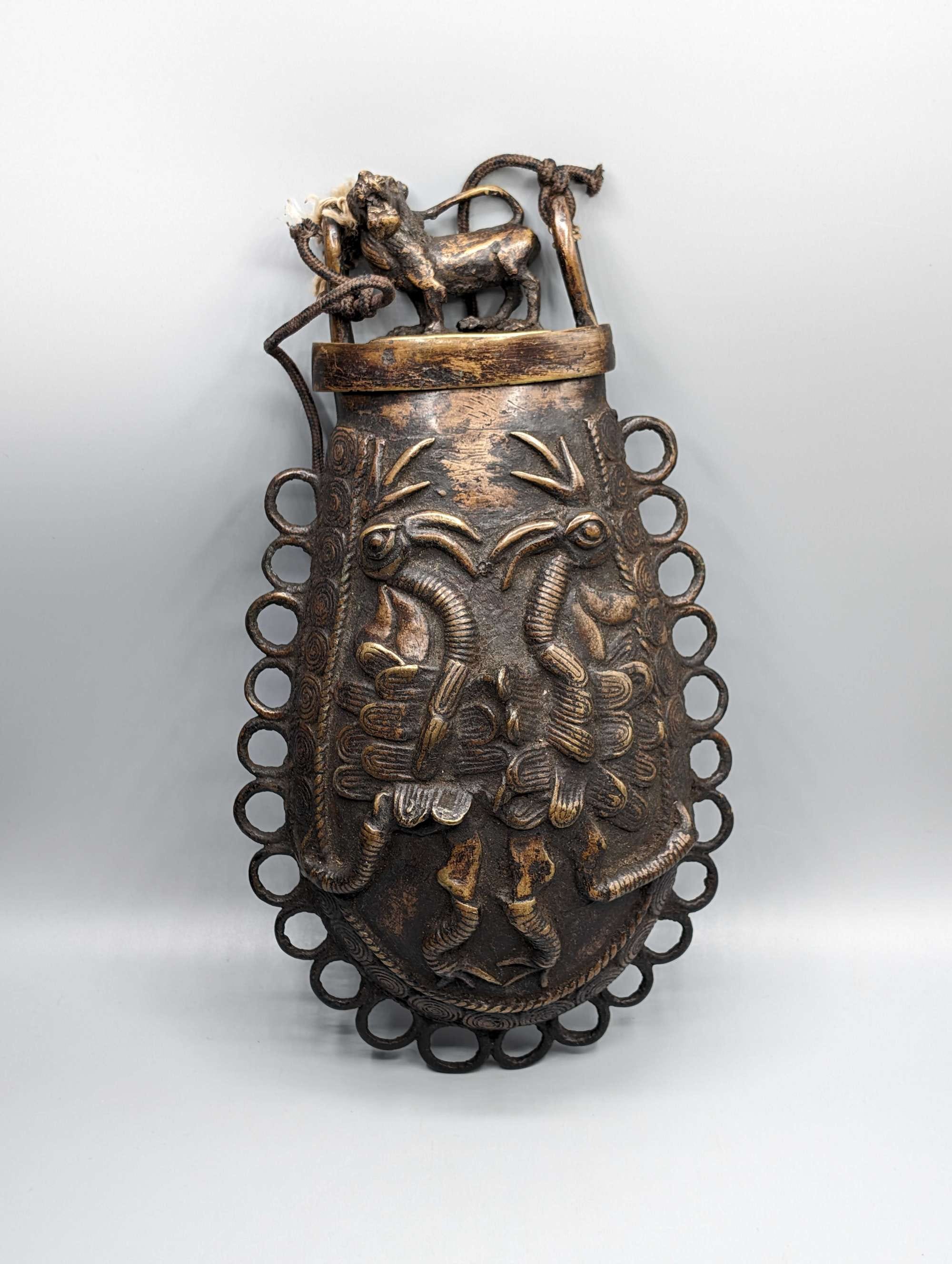
The chief has heard enough. He signals to an attendant who disappears into the inner rooms of the compound and returns carrying a brass vessel. It’s cylindrical, about the length of a forearm, and topped with a leopard cast in brass.
The chief places his hand on it. The two men are told to do the same. Their fingers touch the cool brass. An oath is spoken. The ancestors are listening now. The spirits are witnesses. Whatever truth comes out of their mouths next will be heard by forces beyond this compound, beyond this moment, beyond human judgment alone.
This is a kuduo. If you lie with your hand on it, you’re inviting consequences from the spiritual realm. The kuduo transforms words into binding oaths. It turns a dispute into a sacred proceeding. It makes truth-telling a matter of spiritual survival.
What a Kuduo Is
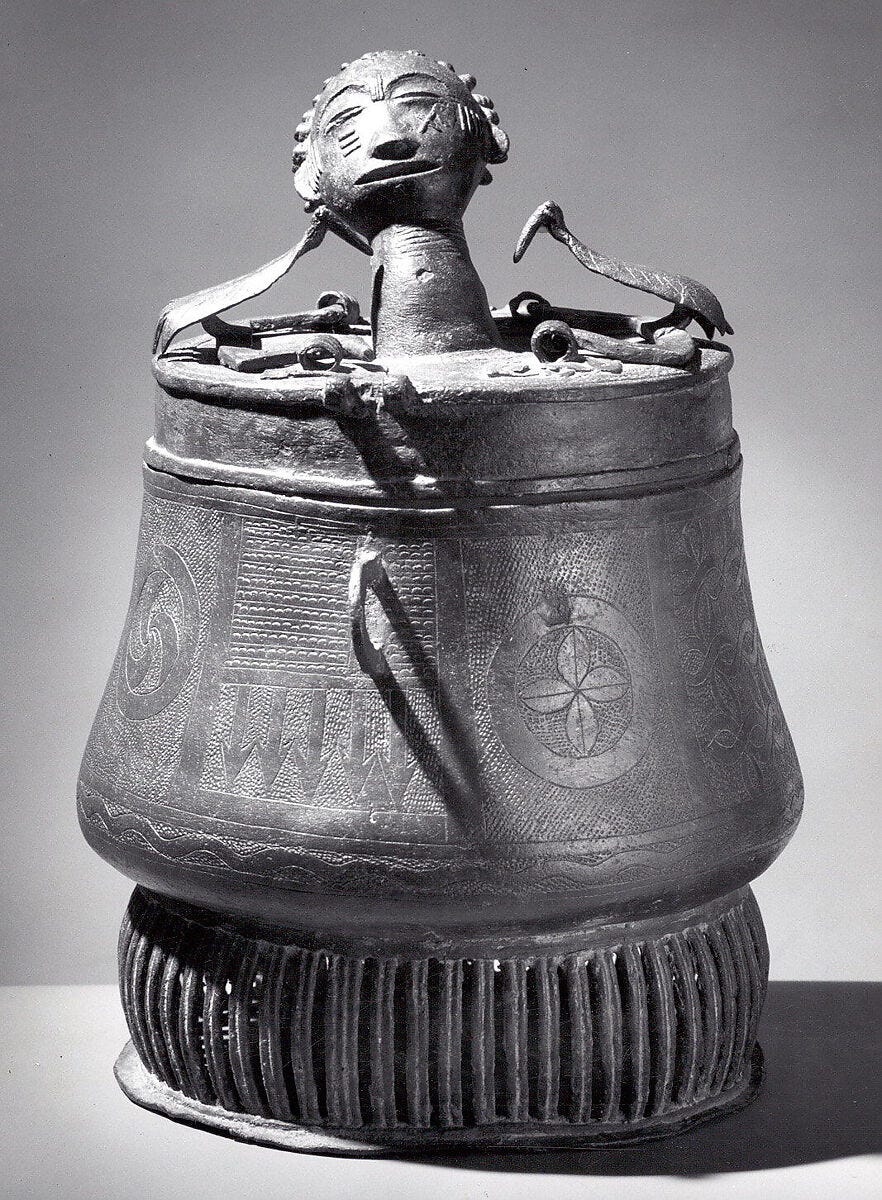
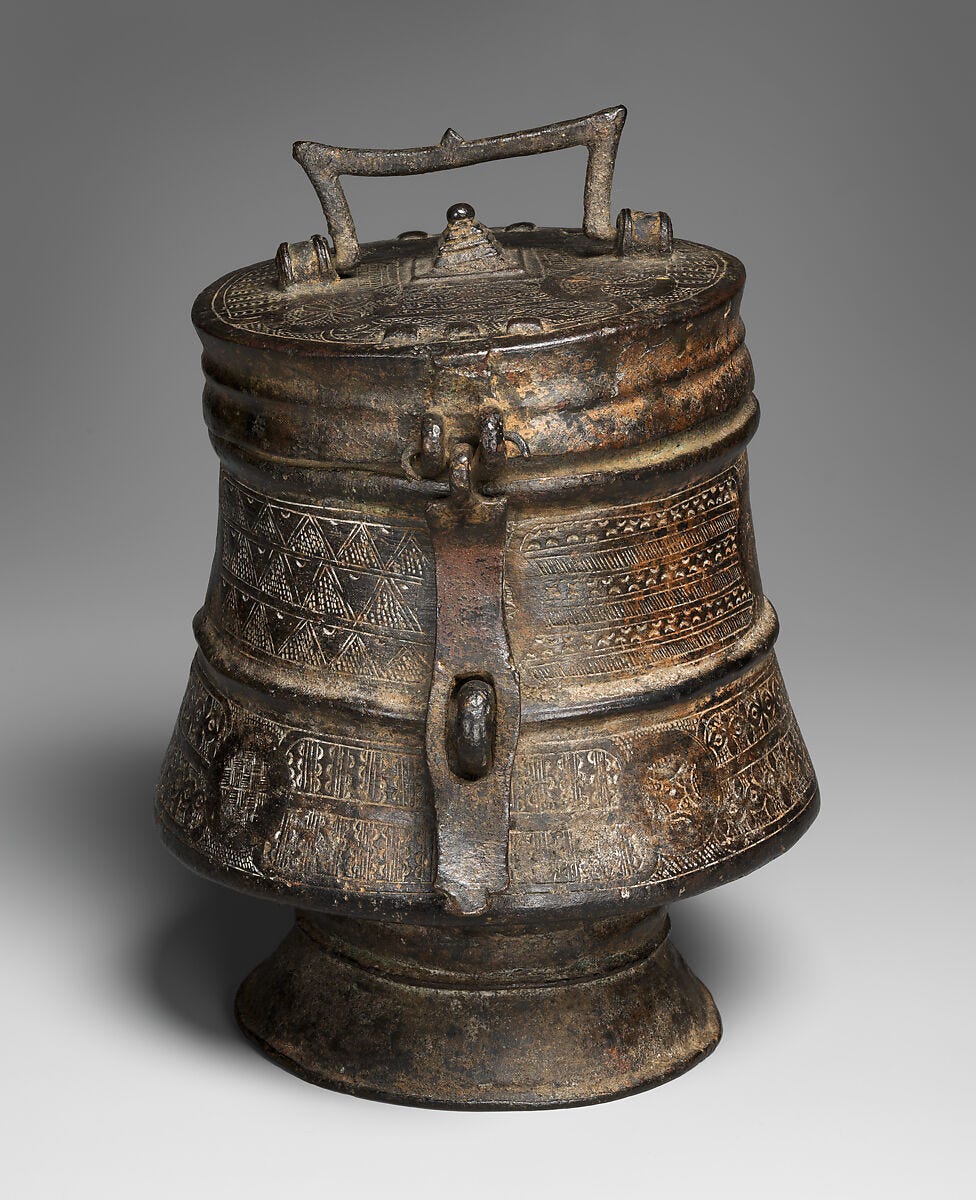
A kuduo is a brass vessel with a lid. The body is usually cylindrical or slightly rounded, cast as a single piece using the lost-wax technique. The lid fits snugly on top and is also cast brass.
The distinguishing feature is the finial on top of the lid. This sculpture, often elaborate, depicts animals, humans, geometric forms, or combinations of these. Common finials show leopards, birds, tortoises, crocodiles, human figures, or abstract symbolic shapes.
The body of the kuduo is often decorated with geometric patterns cast into the surface, symbolic designs, sometimes figurative elements. The decoration varies by maker, by region within Asante territory, by period, and by who commissioned it.
Sizes vary from small vessels perhaps 15 centimeters tall to substantial pieces reaching 40 or 50 centimeters. The size often indicates the owner’s wealth and status because larger kuduo required more brass, which meant more material cost, more labor, and more casting skill.
The brass itself matters. Brass is an alloy of copper and zinc or tin. The Asante didn’t mine these metals locally but imported them through trade. Local brass smiths melted and mixed the alloys, creating brass with specific properties for casting.
Brass was cheaper than gold but still valuable. It was durable, took fine detail in casting, could be polished to shine, and resisted corrosion. For objects that needed to last and look impressive, brass worked beautifully.
What Kuduo Held
Kuduo were storage containers for valuable items:
Gold dust: Before colonial currency, gold dust was money in Asante society. It was weighed out for transactions using goldweights and scales. Keeping gold dust secure was essential. Kuduo provided lockable storage. The lid fit tightly and some kuduo had small holes through the lid and body where a cord could be threaded and sealed with wax to show if the container had been opened.
Kola nuts: These had social and ritual importance. Offering kola nuts was part of welcoming guests, conducting negotiations, showing respect. Storing them in a kuduo indicated their value.
Jewelry and ornaments: Gold rings, bracelets, beads, other valuable personal items. The kuduo protected them and kept them together.
Ritual materials: Items needed for ceremonies, offerings, spiritual practices. Materials that shouldn’t be mixed with everyday objects.
But kuduo were also status objects. Owning a kuduo announced you had wealth worth protecting, items valuable enough to require a brass container. The quality of the kuduo reflected your economic position. A finely cast kuduo with elaborate finial and detailed decoration showed you could commission skilled work and afford substantial brass.
Kuduo were also diplomatic gifts. Chiefs gave kuduo to other chiefs to establish or strengthen alliances. The vessel itself was valuable, but giving a kuduo full of gold dust or kola nuts multiplied the gift’s significance. The kuduo became a container for the relationship, a physical reminder of the bond between giver and receiver.
When chiefs died, kuduo were sometimes buried with them. The vessel accompanied the chief into the afterlife, continuing to serve him. This wasn’t universal practice but happened often enough that kuduo excavated from burial sites provide archaeological evidence of their importance.
The Finials: What They Mean
The sculpture on top of the kuduo lid carries symbolic meanings, often referencing proverbs or representing concepts important in Asante culture.
Leopard: Power, authority, cunning. The leopard was associated with chiefs and royalty. A kuduo with a leopard finial belonged to someone of high status or was acknowledging chiefly authority.
Tortoise: Wisdom, patience, longevity. The tortoise appears in Asante proverbs about careful thought and enduring through challenges.
Crocodile: Unity despite differences. The famous proverb: “The crocodile shares one stomach” meaning that despite having separate mouths (different interests or positions), there’s ultimately shared purpose or unity.
Birds: Various meanings depending on species and context. Some birds represent spiritual messages, others represent specific qualities or stories.
Human figures: Could represent ancestors, spiritual beings, or symbolic representations of social roles. Some finials show figures in specific poses or engaged in activities that reference stories or concepts.
Geometric forms: Abstract shapes that might reference cosmological concepts, spiritual principles, or aesthetic preferences of the maker or owner.
Multiple finials could appear on one kuduo. A lid might have a central figure surrounded by smaller figures or geometric elements. The composition itself could reference relationships, hierarchies, or complex ideas.
The finials made kuduo recognizable and memorable. If a chief owned a kuduo with a distinctive finial, that object became associated with him personally. The finial made the object identifiable in a way plain storage containers wouldn’t be.


Kuduo in Ceremony and Law
This is where kuduo move beyond storage into ceremony and governance.
Oath-taking: As described at the beginning, kuduo appeared in oath-taking ceremonies. Placing hands on the kuduo while swearing made the oath spiritually binding. The kuduo served as physical anchor for the oath, connecting the spoken words to ancestral and spiritual witnesses.
Treaty negotiations: When chiefs or kingdoms negotiated treaties or alliances, kuduo could be present as witnesses to the agreement. Sometimes kuduo were exchanged as part of the treaty, physically representing the bond being created.
Court proceedings: In judicial contexts where disputes needed resolution, kuduo could be brought out to solemnize the proceedings. The presence of the kuduo indicated this was official, witnessed by forces beyond the human participants.
Ritual offerings: In ceremonies involving offerings to ancestors or deities, kuduo might hold the materials being offered or be presented as offerings themselves.
The kuduo’s ceremonial function derived partly from what it contained. Gold dust had economic value but also spiritual significance in a culture where gold connected to the sun, to permanence, to divine forces. Kola nuts had ritual importance. The materials inside the kuduo added to its power as ceremonial object.
But the kuduo’s ceremonial function is also derived from its form and who owned it. A chief’s kuduo carried the authority of that chief’s position. Using his kuduo in a ceremony meant invoking his authority and the spiritual legitimacy of his chieftaincy.
Kuduo became repositories of social memory. A particular kuduo might have been present at important historical moments. It witnessed oaths, treaties, judicial decisions. Over time, the vessel accumulated significance beyond its material value. It became a record of events, a connection to history, and a container for collective memory.
What Distinguishes Asante Kuduo
Kuduo-like vessels appear across West Africa, but Asante kuduo have distinctive characteristics.
Casting quality: Asante brass workers achieved particularly fine detail in their lost-wax casting. The finials are often elaborately rendered with precise features. The body decorations are cleanly executed. This level of technical skill reflects the concentration of resources and talent in royal workshops and the patronage system that supported master craftspeople.
Finial complexity: While other groups made brass vessels with finials, Asante kuduo finials tend toward greater elaboration. Multiple figures, narrative compositions, complex geometric arrangements. This reflects Asante aesthetic preferences and the competitive environment among brass workers trying to create impressive pieces for wealthy patrons.
Royal association: In Asante culture specifically, kuduo became particularly associated with chiefly authority and royal ceremony. The connection between kuduo and political and legal proceedings seems especially developed in Asante context compared to neighboring cultures.
Size range: Asante kuduo vary from small personal containers to quite large ceremonial vessels. This range reflects the different uses and the economic stratification in Asante society. You could own a kuduo appropriate to your status.
This doesn’t mean kuduo are exclusively Asante or that the Asante invented brass casting. Metalworking traditions in West Africa are ancient and widespread. But the particular development of kuduo as ceremonial and legal tools, the aesthetic elaboration, and the integration into Asante governance systems are distinctively Asante contributions.
Kuduo Today
Unlike kente weaving which continues actively in Bonwire, or the Golden Stool which remains in ceremonial use, kuduo production has largely stopped.
The functional reasons for kuduo disappeared with colonial currency replacing gold dust as money. You don’t need a brass vessel to store gold dust when you’re using paper money and coins. The security function kuduo provided became obsolete.
The ceremonial functions diminished when the Asante court system was disrupted. Oath-taking ceremonies still happen, but the specific protocols involving kuduo aren’t maintained at the level they once were.
Some brass casting continues in Ghana, including among Asante craftspeople. Contemporary brass workers might create kuduo-inspired pieces or reproductions of historical forms for the art market or cultural heritage purposes. But these are generally aimed at collectors or cultural institutions, not at functioning as actual kuduo in ceremonies or daily use.
This represents a break in transmission. The technical knowledge of lost-wax brass casting persists. The appreciation for historical kuduo as cultural heritage remains strong. But the living context where kuduo served multiple functions simultaneously has been disrupted to the point where creating new functional kuduo doesn’t make sense in contemporary Asante life.
The kuduo that survive are important as evidence. They show the technical sophistication of Asante brass working. They demonstrate the aesthetic values and symbolic systems. They prove that objects can serve multiple purposes at once. But they’re records of past practice more than living tradition.
The Design Intelligence
What makes kuduo worth studying?
Multifunctionality: A single object that stores valuables, demonstrates status, serves as diplomatic gift, witnesses oaths, legitimizes ceremonies, and accumulates social memory. Each function reinforces the others. The storage function makes it valuable enough to use as gift. The gift function creates connections that make it appropriate for witnessing oaths. The oath function adds to its accumulated significance over time.
Material choice: Brass hit a sweet spot between value and accessibility. Valuable enough to signal status but not so valuable it couldn’t be made in usable quantities. Durable enough to last. Worked well with lost-wax casting for fine detail. Could be polished to visual impact. The material itself carried meanings about permanence and connectivity since brass resulted from trade networks bringing copper and zinc or tin together.
Technical sophistication: Lost-wax casting requires substantial skill, years of training, understanding of materials and temperatures and processes. The quality of Asante kuduo finials shows how much expertise was concentrated in these objects.
Symbolic density: The finials carried proverbs, represented concepts, referenced stories. A kuduo could communicate ideas visually to people who understood the symbolic system.
Integration of practical and ceremonial: Many objects are either practical or ceremonial. Kuduo managed to be both simultaneously without compromising either function. They worked perfectly well as secure storage and also worked perfectly well as ceremonial tools. The design didn’t sacrifice practicality for meaning or meaning for practicality.
The Asante needed containers that could store valuable materials securely, objects that could demonstrate wealth and status, tools that could make oaths and treaties legitimate, gifts appropriate for diplomatic relationships, and vessels that could connect living people to spiritual and ancestral forces.
Kuduo solved all of this in one object.
Further Reading & Sources
Museums:
Manhyia Palace Museum (Kumasi) - Some kuduo and brass work in collection
National Museum of Ghana (Accra) - Asante metalwork
British Museum (London) - Extensive kuduo collection
Victoria and Albert Museum (London) - Asante brass work including kuduo
Fowler Museum, UCLA - African metals collection including kuduo
Metropolitan Museum of Art (New York) - African art collection
Academic Sources:
Garrard, Timothy F. Akan Weights and the Gold Trade (1980) - Includes discussion of kuduo in context of gold trade
Ross, Doran H. and Timothy F. Garrard. Akan Transformations (1983) - Asante arts including metalwork
Cole, Herbert M. and Doran H. Ross. The Arts of Ghana (1977) - Comprehensive coverage including kuduo
Research on Asante brass casting techniques and ceremonial objects
Studies of lost-wax casting in West Africa
Thank you for reading. Save it, share it, and support the communities keeping these traditions alive.
With love and reverence,
Helen