

Khalkha Mongolia | The Deel
A system for riding, weather, and life on the steppe

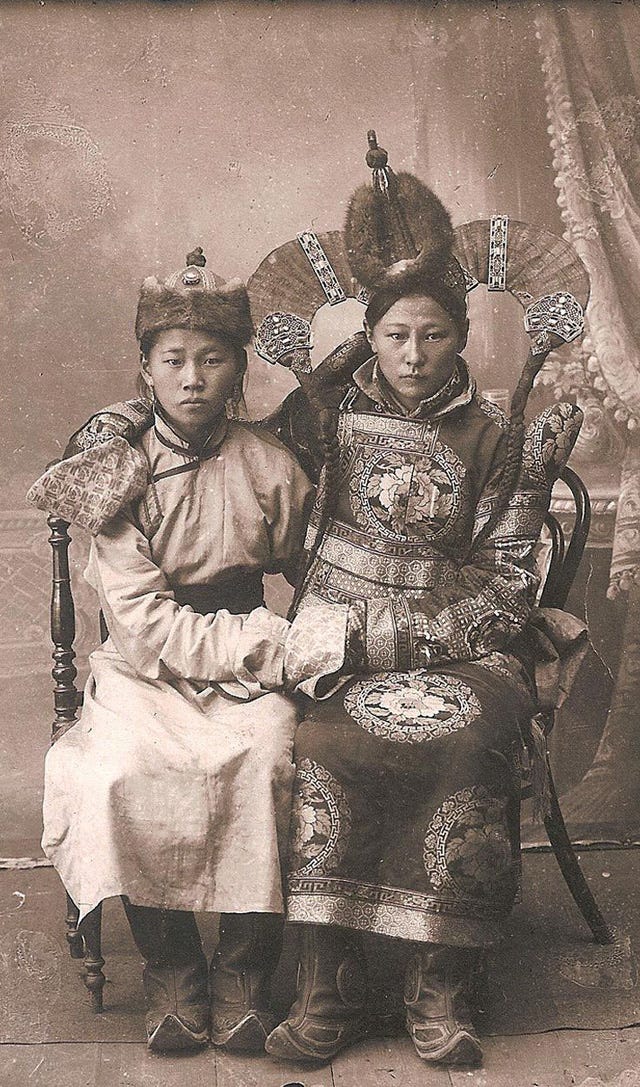
Watching someone approach on horseback across the Mongolian steppe and you can read their story before they’re close enough to speak.
The way their robe wraps across their chest tells you their gender. Left side over right? That’s a man. Right side over left? That’s a woman. The fabric tells you about wealth. Is that Chinese silk brocade with elaborate woven patterns? This person’s family has resources. Is it plain cotton or wool, practical and unadorned? This is someone who works with animals daily, prioritizing durability over display.
The colors and trim tell you about the occasion. Bright colors, elaborate trim, silver ornaments? This is a ceremony or celebration. Subdued colors, simple edges, minimal decoration? This is daily life.
And when they dismount and you see the robe up close, you notice something else. The sleeves extend well past the fingertips. There are slits at the hips that were barely visible when they were standing but opened wide when they were seated on the horse. The high collar stands several centimeters tall, creating a barrier against wind.
This is the deel (дээл), and before you’ve exchanged a single word, it’s already told you who this person is, what they’re doing, and what kind of day they’re having.
What You’re Actually Looking At
At first glance, the deel appears simple: a long robe, a sash, done.
Look closer and you start seeing the intelligence embedded in the construction.
The Asymmetrical Closure
The front of the deel doesn’t close straight down the center. It wraps across the body at an angle, one side overlapping the other, then fastens along the side with buttons, toggles, or ties.
For men: The left side of the garment wraps over the right side, so the closure line runs from the left shoulder area down to the right hip. When fastened, the opening is on the wearer’s right side.
For women: The right side of the garment wraps over the left side, so the closure line runs from the right shoulder area down to the left hip. When fastened, the opening is on the wearer’s left side.
This gender differentiation is absolute and immediately visible. There’s no ambiguity, no variation, no personal interpretation. The closure direction is one of the clearest gender markers in Khalkha culture.
Why this specific system developed isn’t entirely clear from available sources. It’s one of those design choices where the practice is well-documented but the original reasoning is lost or exists only in oral tradition not widely published in accessible academic sources.
What’s certain is that the asymmetrical closure serves practical functions beyond gender marking. It creates a double layer of fabric across the chest and torso, providing extra warmth in winter. It allows the garment to be adjusted for fit and tightness through how you wrap it before securing with the sash.
The High Collar
The collar stands high, typically 5 to 8 centimeters, creating a wall around the neck. This is wind protection. On the open steppe where wind is constant and can be brutally cold, exposed neck is a vulnerability. The high collar blocks wind from getting down to your chest and back.
The collar can be folded down in warmer weather or when indoors, but its height makes it effective when pulled up and closed.
The Sleeve Construction
Deel sleeves are notably long. When your arms hang naturally at your sides, the sleeves extend past your fingertips by several centimeters.
This serves multiple purposes:
Warmth: You can pull your hands inside the sleeves, using the fabric as improvised mittens
Flexibility: You can roll the sleeves back when you need to use your hands for work
Protection: The extra length protects your hands and wrists while riding or working outdoors
The sleeves are typically constructed in two sections. The upper arm section fits the natural position of the shoulder and upper arm. The lower section, from elbow to wrist and beyond, is often cut as a separate piece and attached. This creates a visual break at the wrist and makes it easier to adjust length or replace worn cuffs.
The Side Slits
At hip level, the deel has openings on each side. These might be simple slits in the fabric or more structured pleats, depending on the specific construction.
When you’re standing, these slits lie relatively flat and closed. When you straddle a horse and sit in the saddle, your leg position naturally opens the slits, releasing fabric to accommodate your legs spreading wide apart. The garment itself adapts to different body positions without requiring you to adjust anything manually.
The Sash
The deel is always worn with a long fabric sash wrapped multiple times around the waist. It’s structural to how the garment functions.
The sash:
Holds the garment closed (the asymmetrical wrap won’t stay in place without something securing it)
Creates adjustable fit (you can tighten or loosen the sash to adjust how snug the deel fits)
Provides core support (the wrapped sash around the waist and lower back provides support during long hours of riding or physical work)
Creates storage (the pouch created at the chest when you wrap the sash can hold small items)
Men typically wear simpler fabric sashes. Women’s sashes might be more elaborate, potentially including decorative elements or having silver ornaments attached. Wealthy married women historically wore elaborate silver belts with nine sections, though these were worn over rather than instead of the fabric sash.
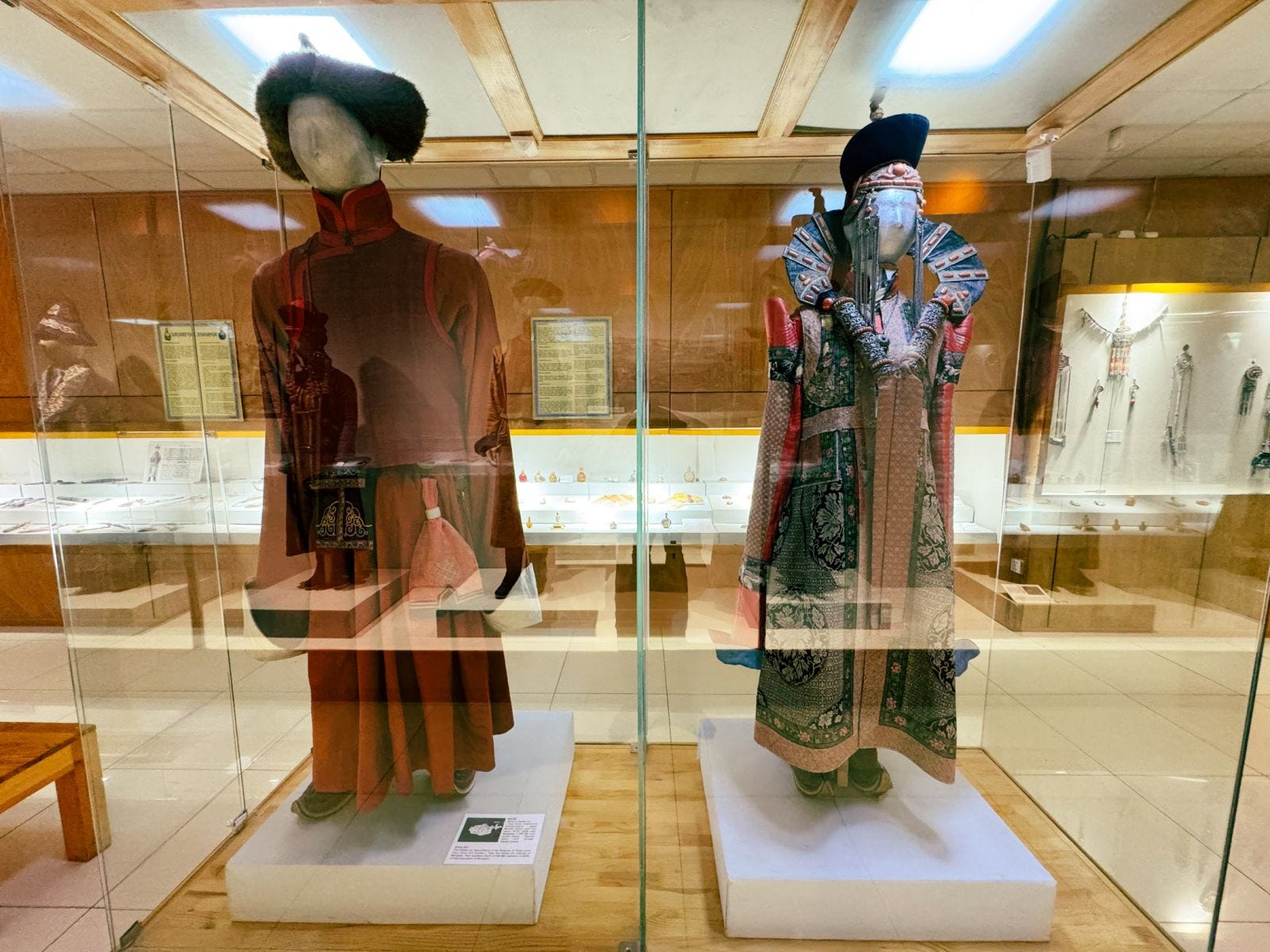
How a Deel Is Made
Traditional deel-making is women’s knowledge, transmitted from mothers and grandmothers to daughters through hands-on practice.
Pattern Cutting
The deel is cut from flat fabric pieces that will wrap around a three-dimensional moving body. The pattern consists of:
Front panels (left and right) cut to overlap at the specific angle needed for proper closure
Back panel typically cut in one continuous piece
Sleeve pieces (upper arm and lower arm/cuff sections)
Collar piece
Underarm gussets (small diamond-shaped pieces)
The asymmetrical overlap at the front requires precise angle calculation. Too shallow and the garment gaps open. Too steep and it pulls tight across the chest. Experienced deel-makers can judge this angle by eye, adjusting for the individual wearer’s body proportions.
The underarm gussets are crucial but easy to overlook. These diamond-shaped fabric pieces inserted between the body and sleeve create room for arm movement. Without them, raising your arms would pull the entire garment upward. The gussets allow arms to move independently of the torso.
Construction
Sewing can be done by hand or machine, depending on context and available tools. Seams are typically flat-felled or bound to prevent fraying and add strength. The garment needs to withstand daily wear in harsh conditions.
The collar is attached and structured to stand upright. The sleeves are set in with gussets positioned correctly for arm movement. The side slits are created and their edges finished. The closure edge is prepared for fasteners.
Finishing details matter. The edges (collar, cuffs, front opening, hem) are often trimmed with contrasting fabric or decorative braid. This trim isn’t purely aesthetic. It reinforces edges that receive heavy wear and protects them from fraying.
Fitting and Adjustment
A well-made deel is fitted to the individual wearer. Arm length, torso length, shoulder width, and closure angle are all adjusted for the specific person who will wear it.
This fitting knowledge is embodied. Experienced makers can look at a person, take a few basic measurements, and cut a deel that fits properly without elaborate measuring systems or written patterns. The knowledge lives in their hands and eyes.


Materials and Seasons
You don’t wear the same deel year-round. Mongolia’s temperature extremes (from -40°C in winter to 35°C+ in summer) require seasonal adaptation.
Winter Deels
These are substantial garments designed for severe cold:
Sheepskin with wool inside (the wool provides insulation directly against the body)
Heavy felted wool (compressed felt is excellent insulation)
Thick silk with padding or fur lining (for those who can afford it)
Dark exterior colors (brown, black, dark blue hide dirt and soot from fires)
Winter deels are heavy. They’re meant to be. That weight is insulation and protection.
Summer Deels
Summer requires completely different materials:
Lightweight cotton (breathable, cooler)
Thin silk (for those with resources)
Light colors (white, pale blue, soft gray reflect heat rather than absorbing it)
Sometimes sleeveless or with detachable sleeves
Some people switch to simpler, shorter versions in summer or wear just the deel structure without heavy layers.
Ceremonial Deels
For festivals, important ceremonies, and special occasions:
Chinese silk brocade (elaborate patterns woven into the fabric)
Extensive trim work (silver thread, elaborate braid, complex edging)
Bright or significant colors (following traditional color symbolism)
Silver buttons or toggles (functional but also decorative status markers)
These garments are investments. Families save for them. They’re worn rarely, carefully stored between uses, and sometimes passed down through generations.
Color, Trim, and Social Communication
The visual appearance of a deel communicates social information that everyone in Khalkha society learns to read.
Historical Color Restrictions
During the Qing Dynasty period (when Khalkha territories were under Qing suzerainty from 1691 to 1911), certain colors were restricted by sumptuary laws:
Yellow and gold were reserved for high-ranking Buddhist lamas and aristocracy. Wearing yellow without proper authority was claiming a status you didn’t possess, which could bring consequences.
Red was associated with monasticism and ceremonial occasions. It was acceptable for festivals but not appropriate for everyday wear by laypeople.
White was and remains associated with celebrations and auspicious occasions. White deels appear at Lunar New Year (Tsagaan Sar), weddings, and festivals. White is considered pure and fortunate.
Dark colors (brown, black, dark blue) were practical for daily work. They don’t show dirt, soot, or stains as visibly as light colors.
These restrictions have relaxed in contemporary Mongolia, but color associations persist in more subtle ways. People still tend to wear white for celebrations and dark colors for work, though personal choice has much more room now than historically.
Trim as Status Display
The edges of the deel are where status shows most clearly through finishing details:
No trim or simple cotton edging: Working person, modest economic means. The deel is functional, nothing more.
Silk ribbon or patterned trim in contrasting colors: Comfortable economic position. Resources to spend on appearance beyond bare necessity.
Elaborate brocade trim, metalwork, silver buttons, complex edging: Wealth. This family has resources and they’re displaying them.
The quality and extent of trim work signals economic position more subtly than you might expect. Experienced observers can assess someone’s approximate economic status from trim details before the person is close enough to see fabric quality clearly.
Regional Variations
Within Khalkha territory, subtle regional variations exist in preferred colors, trim patterns, and construction details. These aren’t dramatic differences, but locals can sometimes identify what region someone is from based on these small variations.
Eastern Khalkha areas might favor certain trim patterns or color combinations that differ slightly from central Khalkha preferences. These are cultural dialects in clothing form.


The Deel and Horseback Life
Understanding the deel requires understanding horses. The Khalkha were accomplished riders. Daily life involved substantial time on horseback: moving herds, traveling between locations, hunting, visiting distant neighbors.
Clothing designed for walking doesn’t work well for riding. The body positions are different. The movements are different. The deel is specifically engineered for mounted life.
Biomechanics of Riding
When you sit on a horse:
Your legs spread wide apart (much wider than walking stance)
Your hips rotate forward slightly
Your spine stays vertical but constantly absorbs the horse’s motion
Your arms extend forward to hold reins
Wind hits you continuously and directly
Clothing needs to accommodate all of this without restricting movement or creating discomfort.
How the Deel Solves Riding Problems
The side slits are the primary innovation for riding. When you straddle a horse, your leg position automatically opens these slits, releasing fabric exactly where you need room for your legs. No adjustment needed. Your body position does the work.
The length provides coverage for your legs while mounted. In cold weather, this is crucial protection. The fabric drapes over the saddle and the horse’s sides, creating a shared heat zone between rider and animal.
The long sleeves protect hands and forearms while holding reins, especially in cold or windy conditions. You can pull hands inside sleeves for warmth while still maintaining rein control through the fabric.
The wrap construction with sash provides core stability. The multiple wraps of fabric around your torso and the tight sash create support for your lower back during long hours of riding.
The high collar prevents wind from getting down your neck while riding into the wind, which happens constantly when you’re moving across open landscape.
For Non-Riders
People who grow up in cities and never ride horses regularly sometimes find traditional deels uncomfortable or awkward when they first wear them. This makes sense. The garment is optimized for mounted life.
The features that make it excellent for riding (extra length, long sleeves, side slits) can feel like unnecessary bulk when you’re just walking around. The deel is solving problems that urban walkers don’t have.
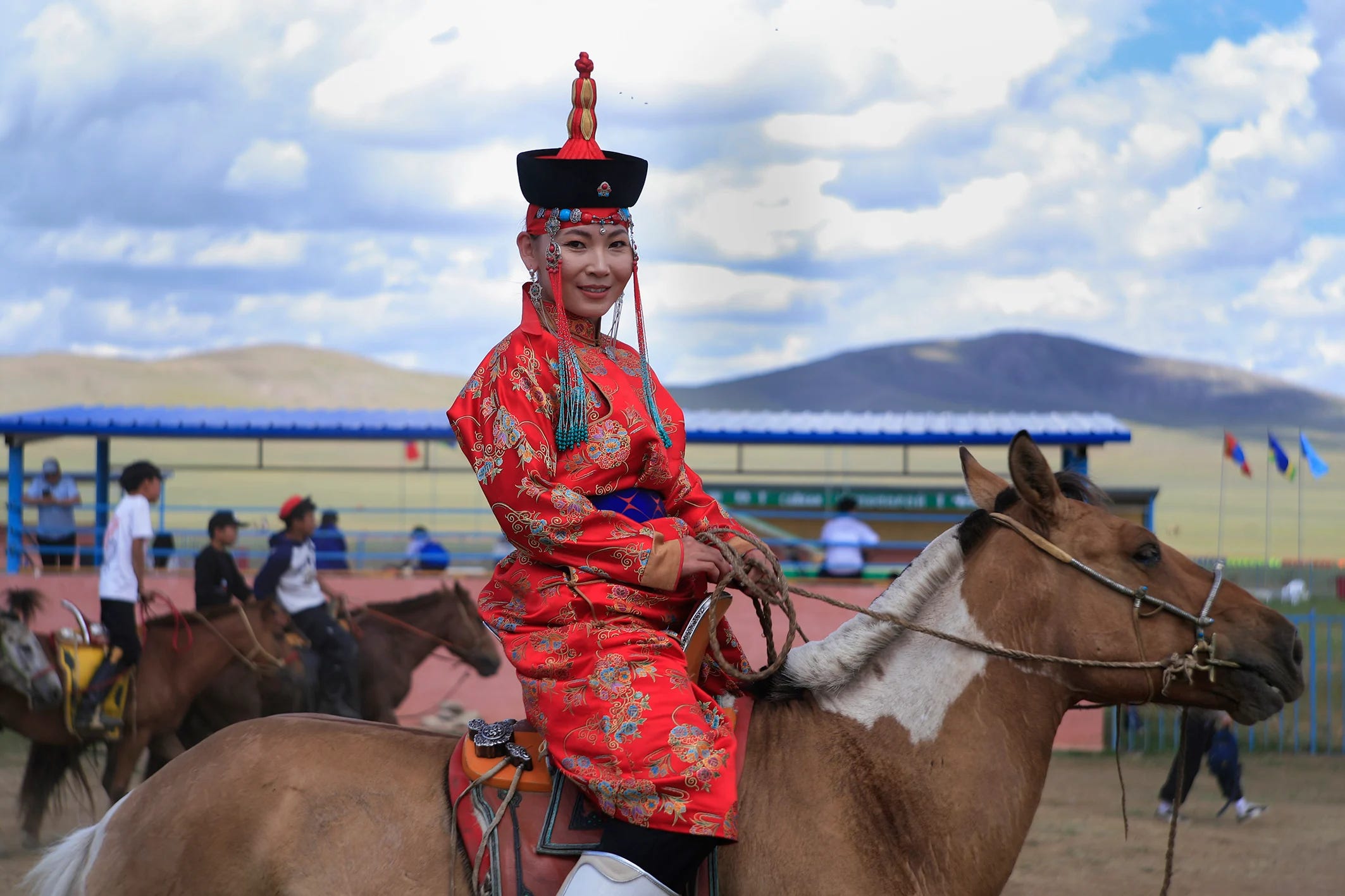
Gender Encoding Beyond the Closure
While the asymmetrical closure is the most obvious gender marker, other consistent differences exist between men’s and women’s deels:
Fit
Men’s deels tend to be cut more loosely and straight through the body. The silhouette is relatively uniform from shoulders to hem.
Women’s deels, particularly for younger women, are often more fitted at the waist and chest, creating more defined body shape. This isn’t universal and varies by region, period, and personal preference, but it’s a general pattern.
Sleeve Work
Women’s deels typically feature more elaborate cuff decoration. This might include:
Embroidery at the cuffs
Appliqué panels in contrasting colors or patterns
More extensive trim work on sleeve edges
Decorative buttons or fasteners at the cuffs
Men’s sleeve decoration is typically simpler and more functional.
Length
Women’s deels are sometimes slightly longer than men’s, though this varies and isn’t a strict rule. Both genders wear long deels, but women’s might extend slightly closer to the ankle.
Accessories
Women wear more elaborate sashes and might add jewelry or silver ornaments. Historically, married women wore distinctive silver belts with nine sections.
Men’s accessories tend toward practical items: knife sheaths, fire-striking kits, small pouches for tools or personal items, all attached to a simpler sash.
The Deel Through Socialist and Post-Socialist Periods
1924-1990: Socialist Period
During Mongolia’s socialist period, the government promoted modernization, which often meant adopting Soviet-style or Western-style clothing. Urban work, schools, and official settings required modern dress. The deel became increasingly categorized as “traditional costume” rather than daily clothing.
In cities, people wore deels primarily for:
Naadam festival (the national celebration)
Lunar New Year celebrations
Weddings and major family events
Cultural performances
Rural herders continued wearing practical deels for daily work because Western-style clothing didn’t handle their conditions as well. Pants and jackets don’t provide the same wind protection, thermal regulation, or riding functionality as a well-made deel.
So the deel survived the socialist period in two forms: as ceremonial urban dress and as practical rural workwear. Deel-making knowledge contracted but didn’t disappear.
1990-Present: Revival and Reinvention
After Mongolia’s democratic transition in 1990, cultural revival included renewed interest in the deel.
Ceremonial wearing increased. People who had owned deels but rarely wore them began wearing them more frequently for cultural events. Families invested in new ceremonial deels for their children. The deel became a conscious statement of Mongolian identity.
Fashion designers started experimenting. Contemporary Mongolian designers began creating modern interpretations:
Traditional silhouettes in contemporary fabrics
Simplified construction for people unfamiliar with traditional wear
Fusion pieces combining deel elements with Western clothing styles
Designer deels for runway shows and high fashion contexts
Debates emerged. What counts as an authentic deel? Must it be hand-sewn or is machine sewing acceptable? Can you use synthetic fabrics or only natural materials? Is a simplified pattern that’s easier to wear a legitimate evolution or a degradation?
These affect what gets taught in cultural programs, what gets preserved in museums, and who has authority to speak about Khalkha clothing traditions.
The Olympics Visibility
During the 2024 Paris Olympics and 2026 Milan Cortina Winter Olympics, Mongolia’s ceremonial uniforms drew global attention. The designs, created by Michel & Amazonka (Paris) and Goyol Cashmere (Milan), were explicitly inspired by the deel.
The designers were clear about their approach. Michel & Amazonka explained: “Our uniforms represent our national costume that we wear during Naadam. Our traditional clothes are colorful and extravagant which is not suitable for a sports arena. So we minimize our design to fit the perception of local and other nationalities but added intriguing elements on the uniform to draw attention.”
This is contemporary designers working with traditional forms, adapting them for international context, maintaining recognizable elements (asymmetrical closure, high collar, overall silhouette) while making them work as Olympic uniforms.
The global response was enthusiastic. Social media commentary praised the designs as sophisticated, beautiful, and culturally distinctive. The viral attention brought Mongolian clothing design to millions of people who had never thought about it before.
Contemporary Deel Life
Today, the deel exists in multiple contexts:
Rural Working Deels
Some herding families still wear practical deels regularly for work. These are sturdy cotton or wool, made to get dirty and survive hard use. They’re functional clothing for people whose work involves animals, outdoor exposure, and horseback riding.
Urban Ceremonial Deels
City-dwelling Mongolians typically own at least one deel for special occasions. This might be worn a few times a year: Naadam, Tsagaan Sar, weddings, formal cultural events.
These deels are stored carefully between uses, often in protective coverings. They’re investments representing cultural identity and family pride.
Children’s Deels
Families often dress children in small deels for festivals and celebrations. This teaches young people about traditional clothing and creates photo opportunities that families value.
Children’s deels are sometimes made with extra length in sleeves and hems, with the expectation that the child will grow into them over several years.
Fashion and Designer Deels
Contemporary Mongolian fashion includes deel-inspired or deel-based designs appearing in runway shows, boutiques, and designer collections. These range from fairly traditional interpretations to highly experimental pieces.
Tourist Market Deels
Souvenir shops sell simplified “deels” aimed at tourists. These often use shortcuts in construction, cheaper materials, and approximate rather than accurate traditional forms. Quality varies enormously.
What Gets Lost and What Persists
At Risk:
Traditional pattern-cutting knowledge. The ability to judge angles and proportions by eye, to create properly fitted deels without written patterns, exists in aging craftspeople. Younger people learning often use standardized patterns rather than developing embodied judgment.
Natural dyeing. Traditional methods of dyeing fabrics using natural materials have been largely replaced by synthetic dyes. The knowledge exists in fragmentary form but isn’t widely practiced.
Regional variation details. The subtle differences between eastern and central Khalkha deel construction and decoration are being smoothed over into generic “Mongolian” styling.
Fine hand-sewing techniques. Much deel construction now uses sewing machines. This is faster and more economical, but it means certain hand-sewing techniques are used less frequently and might be lost.
Persisting:
The basic form. The asymmetrical closure, high collar, long sleeves, and side slits remain consistent even in contemporary interpretations.
The gender closure rule. Even heavily modernized deels maintain the left-over-right (men) and right-over-left (women) closure directions.
Seasonal material variation. People still understand that summer and winter deels require different fabrics, even if the specific materials have changed.
Cultural identity connection. The deel remains a powerful symbol of Mongolian identity, recognized and valued even by people who rarely wear one.
Discussion Question: Have you ever worn clothing designed for a specific activity or context that made perfect sense there but felt completely wrong somewhere else? Riding gear off the horse? Formal traditional dress outside ceremony? Work clothes outside work? Athletic gear outside the gym?
What did that experience teach you about how clothing design responds to specific contexts and requirements?
Further Reading & Sources
Museums:
National Museum of Mongolia (Ulaanbaatar) - extensive deel collection across periods and styles
Zanabazar Museum of Fine Arts (Ulaanbaatar)
International ethnographic museums with Central Asian collections
Academic Sources:
Research on Mongolian clothing and material culture
Studies of Central Asian textile traditions
Anthropological work on clothing and social identity
In Contemporary Context:
Naadam festival footage (shows deels in ceremonial use)
Contemporary Mongolian fashion designers’ work
Michel & Amazonka’s Olympic uniform design process
Documentation of rural herding communities
Comparative Traditions:
Other Central Asian robe traditions (Uzbek chapan, Tibetan chuba)
How different cultures solve similar problems (climate, mobility, social communication) through clothing
This concludes our April series on Khalkha Mongolian design systems. We’ve explored how worldview, spirituality, constraint, and social organization shape what the Khalkha create. Next month: A new culture, new design systems, new intelligence to discover.
Thank you for reading. Save it, share it, and most importantly support the artists, weavers, architects, and communities keeping these traditions alive.
This is a living document. If you notice a missing detail or a thread worth adding, let me know so we can keep building this archive together.
With love and reverence,
Helen
Culture of the Month: Khalkha Mongol
You’re currently reading part of our April deep-dive into Khalkha Mongol’s cultural design intelligence. Explore the full series:
Week 1 - Khalkha Mongolia | Introduction: Design Systems from the Steppes
Week 1: Khalkha Mongolia | The Ulzii - A Pattern That Teaches Philosophy
Week 2: Khalkha Mongolia | The Soyombo Symbol
Week 2: Khalkha Mongolia | The Ger
Week 3: Khalkha Mongolia | The Nine White Banner Tradition
Week 4: Khalkha Mongolia | The Deel (You are here)