

Re:Design | Lost-Wax Casting Across Cultures
How one metalworking method produced brass archives in Africa, perfect athletes in Greece, dancing gods in India, and ritual vessels in China


Humans have always needed permanence.
We needed to capture what mattered before it disappeared. To honor the dead before their names were forgotten. To make visible the gods we couldn’t see. To prove to future generations that we existed, that we mattered, that we understood something true about the world.
Wood rots. Cloth decays. Clay breaks. Even stone erodes.
But metal endures.
Across the ancient world, cultures independently discovered a brilliant solution: lost-wax casting. You carve what you want in wax. You encase it in clay. You burn out the wax and pour in molten metal. When you break away the clay, what remains is your vision, frozen in bronze or brass or gold, ready to outlast empires.
The technique appeared in Mesopotamia around 3500 BCE. It emerged in China by 1500 BCE, in India before 2500 BCE, independently in West Africa by the 9th century CE, and in pre-Columbian Americas by 500 CE.
Same problem. Same solution. Same basic chemistry and physics.
But what they made was utterly, completely, profoundly different.
This is the story of why.
Benin Kingdom: Metal as Memory
So far this month we’ve studied the Benin’s lost-wax casting and The brass plaques that covered palace walls. We have two more artifacts to look into.
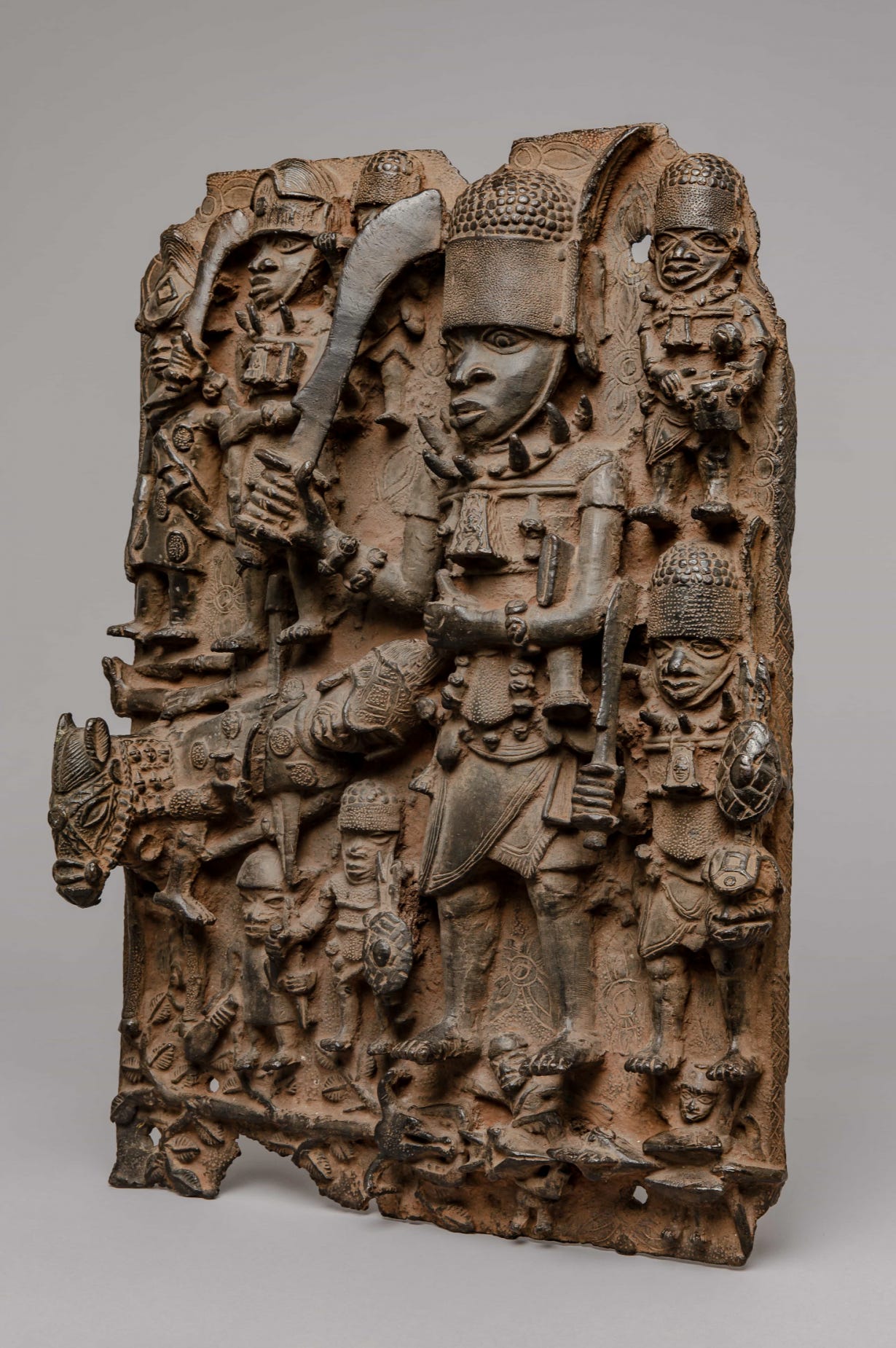
In Benin, lost-wax casting solved a specific problem: how to preserve history in a tropical climate where everything decays quickly. The Edo word for casting brass, “sa-e-y-ama,” literally means “to remember.” Casting and memory were the same concept. ( I know, I know… It’s beginning to sound like a song)
The brass plaques documented court ceremonies, military victories, and political hierarchies. They were visual archives that could be consulted when disputes arose. The commemorative heads facilitated ongoing relationships with deceased Obas. During ceremonies, the Edo believed ancestors literally inhabited these heads.
The aesthetic emphasized information density. Important figures appeared larger than less important ones. Every coral bead pattern indicated rank. Every animal symbol represented spiritual forces. Nothing was decorative alone. The goal wasn’t beauty for its own sake but encoding maximum information in permanent form.
For Benin, lost-wax casting was political infrastructure. It maintained the systems that allowed the kingdom to function: historical documentation, spiritual communication with ancestors, and visible display of hierarchy.
Ancient Greece: Metal as Ideal Form
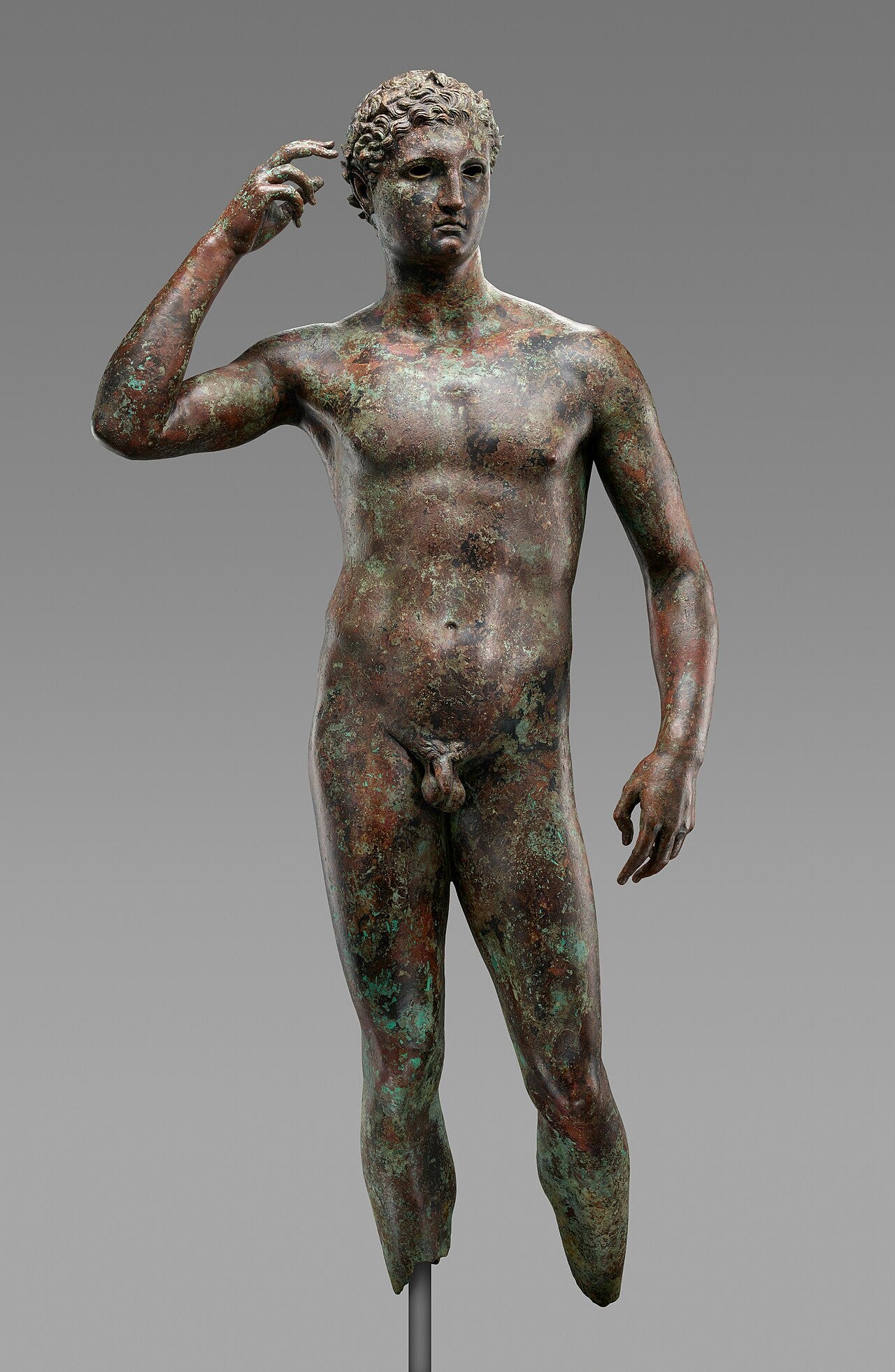
Meanwhile, across the Mediterranean, Greek bronzeworkers created life-sized sculptures of human figures. Athletes frozen mid-motion. Warriors in perfect stance. Gods and goddesses embodying divine beauty.
Greek bronze casting solved a different problem: how to capture and celebrate human physical perfection. The Greeks believed the body at its peak revealed something true about the cosmos.
Bronze sculptures were displayed in sanctuaries, public spaces, and Olympic sites. They commemorated athletic victories and made philosophical statements about what humans could achieve. A bronze statue elevated the athlete to semi-divine status.
The aesthetic was completely different from Benin. Greek sculptors studied human anatomy obsessively. They understood muscle structure, weight distribution, how skin moves over bone. Their bronzes showed bodies as they actually appeared, down to veins and tendons. Figures stood in natural poses with weight shifted to one leg. Eyes were inlaid with colored stone. Hair was minutely detailed.
The goal was capturing not how humans actually looked but how they looked at their absolute best. Bronze froze perfection before age, injury, or death could corrupt it.
For Greece, lost-wax casting was philosophical inquiry made physical. It asked: what is the perfect human? How do we make the ideal visible and permanent?
Chola India: Metal as Divine Presence
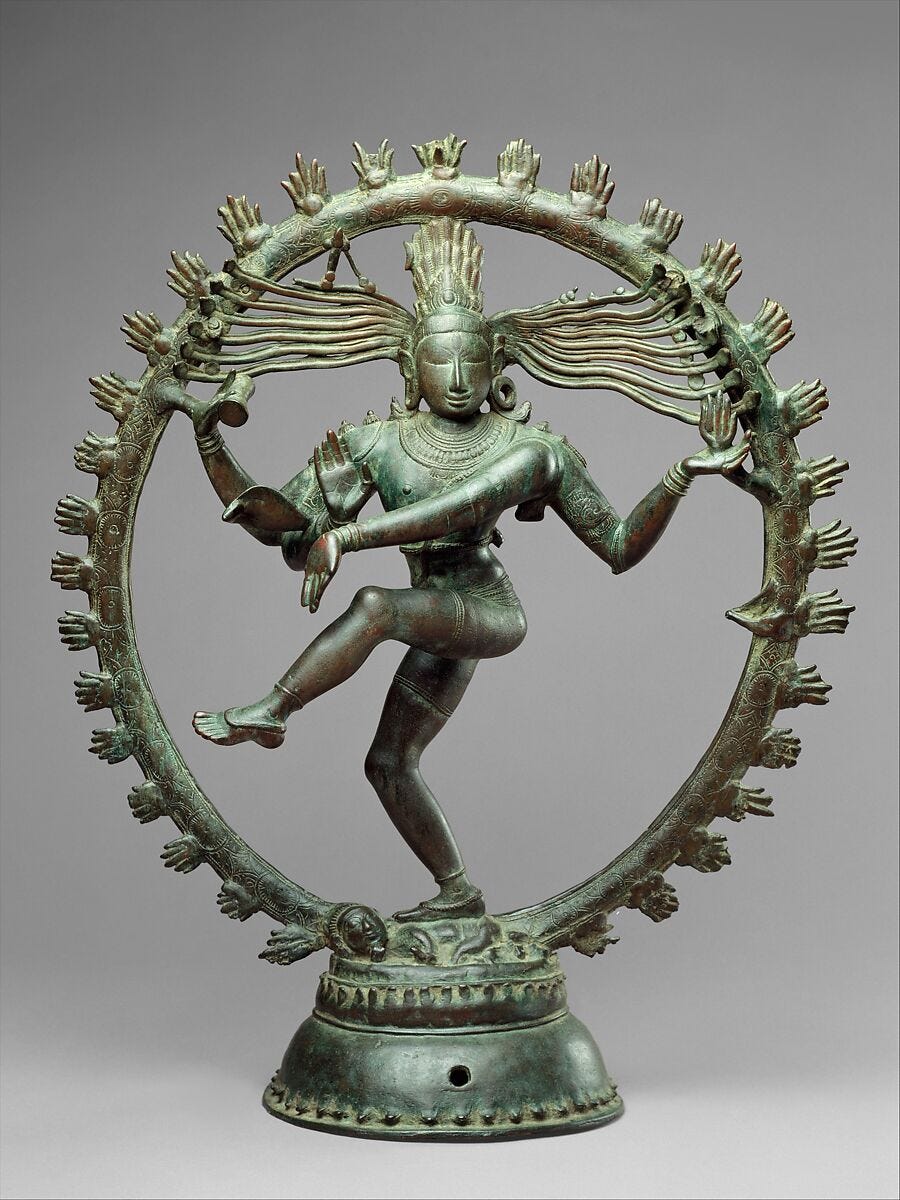
In southern India, the Chola Dynasty produced bronzes that served yet another purpose entirely. Most famous are the Nataraja figures showing Shiva as Lord of the Dance, caught mid-dance within a ring of flames.
Chola bronze casting solved the problem of how to make gods physically present. In Hindu belief, properly consecrated bronze sculptures don’t just represent deities. They become temporary homes for divine presence.
During festivals, priests would ritually “wake” the deity, bathe and dress the bronze, make offerings to it, and carry it in elaborate processions through the streets. Devotees could see their god moving through the city, blessing it with divine presence.
This is fundamentally different from both Benin (where art documented) and Greece (where art idealized). In Chola India, the bronze sculpture was the god, literally, during ritual use.
The aesthetic emphasized divine vitality. Unlike Greek bronzes frozen in perfect static poses, Chola figures are in motion. Shiva dances. Vishnu walks. The metal captures divine energy. The bodies are beautiful and proportionate but less anatomically realistic than Greek work. They show divine perfection, which follows different rules than human perfection.
The bronzes also had practical considerations. They needed holes for poles so they could be carried. They needed points where garments could be attached. They were designed to be dressed, processed, and handled.
For Chola India, lost-wax casting was making heaven touchable. The bronze became a bridge, literally bringing gods down to walk among their devotees.
Shang China: Metal as Cosmic Communication
Shang Dynasty China used piece-mold casting, a cousin technique to lost-wax. Instead of a wax model, they carved designs into ceramic sections that fit together.
What they made were ritual bronze vessels. Tripod cauldrons for cooking meat offerings. Containers for grain. Wine warmers. Dozens of specialized forms, all covered in intricate geometric patterns and stylized animal masks.
These vessels solved the problem of communicating with ancestors and maintaining cosmic order. In Shang belief, deceased rulers became powerful spirits. Maintaining good relationships with them was essential for the dynasty’s survival.
The bronze vessels held offerings during elaborate ancestral rituals. The ritual act of preparing offerings in proper vessels maintained harmony between the living world and the spirit world.
The aesthetic was entirely different from Benin’s narrative plaques, Greek naturalistic bodies, or Chola’s dancing gods. Shang vessels were covered in precise geometric patterns: spirals, meanders, squares, triangles. Stylized animal faces emerged from these patterns, possibly representing protective spirits.
The specific shape of each vessel indicated its exact use. A ding was for cooking meat. A gui was for grain. A jue was for warming wine. Form followed ritual function with no variation allowed.
For Shang China, the aesthetic emphasized ritual correctness. Innovation was less important than precision in replicating ancestral traditions.


Why the Same Technique Produced Different Worlds
Why did the same technique (molten metal poured into a mold) produce a historical record in Benin, an idealized athlete in Greece, a dancing god in India, and a ritual vessel in China?
The technique was neutral. The culture was everything.
Lost-wax casting is just a method for making detailed metal objects. It doesn’t inherently create any particular aesthetic. It doesn’t automatically serve any particular function.
What the technique creates depends entirely on what the culture values enough to make permanent.
Benin valued lineage and historical record. They were building an empire that would last centuries. They needed to document events, establish precedents, and maintain connections with ancestral wisdom. So they cast brass plaques and commemorative heads.
Greece valued human excellence and divine beauty. They believed the perfected human form revealed cosmic truths. They celebrated athletic achievement as semi-divine. So they cast nude athletes and idealized gods.
Chola India valued divine presence in daily life. They needed their gods to be touchable, visible, able to process through city streets. So they cast bronzes that gods could temporarily inhabit.
Shang China valued cosmic order and ancestral harmony. They believed the dynasty’s survival depended on maintaining proper relationships with ancestral spirits through exact ritual performance. So they cast vessels that enabled those rituals.
Same metal. Same fire. Same basic chemistry. Completely different answers to the question: what matters most?
The Technique Spread, But So What?
Lost-wax casting probably originated in Mesopotamia around 3500 BCE and spread to nearby regions through trade. Greece learned it from Near Eastern cultures. But in West Africa, the technique appeared independently by the 9th century CE, thousands of years later and thousands of miles away. In the Americas, pre-Columbian cultures developed it independently by 500 CE.
Lost-wax casting is what scholars call a “convergent technology.” It’s discovered independently because it’s one of the best solutions to a universal problem: making detailed permanent metal objects.
But what you make with it isn’t predetermined. That’s pure culture.
What This Means Today
The same lost-wax technique that created these objects now sits at the center of global debates about cultural property and colonialism.
Thousands of Benin brass objects sit in European museums, stolen during the 1897 British invasion. Germany is returning hundreds. The British Museum holds nearly 1,000 and refuses to give them back.
Hundreds of Chola bronzes were stolen from Tamil temples and sold to Western collectors. India has successfully repatriated some, but many remain in foreign collections.
These aren’t just mere art objects. In Benin, they’re ancestors and archives. In India, they’re consecrated deities stolen from active temples. Their removal was spiritual violence, not just property crime.
The lost-wax technique that made them didn’t create these problems. Colonialism, looting, and the art market did.
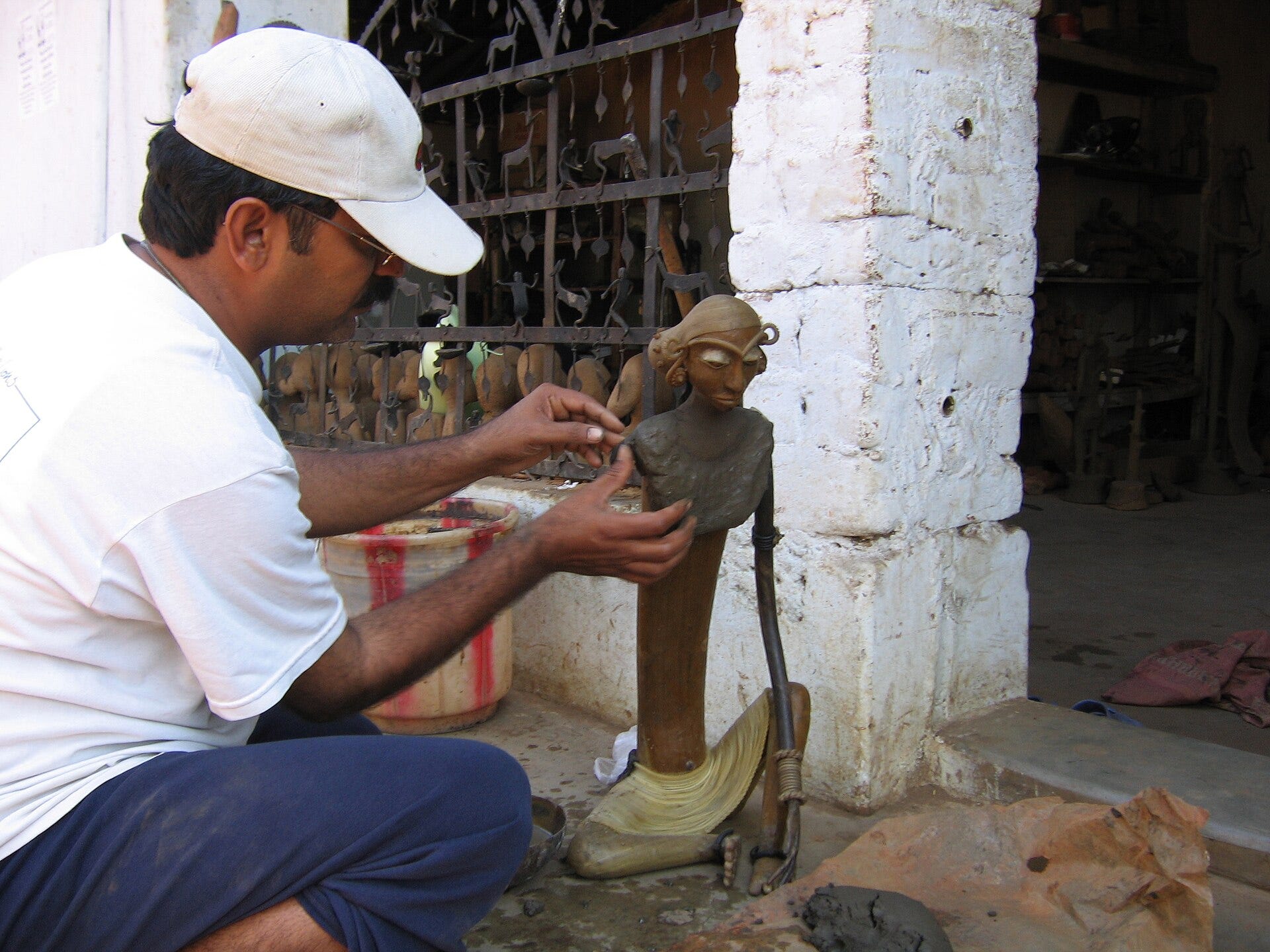
Meanwhile, the technique continues. The Igun Eronmwon guild still practices lost-wax casting on Igun Street in Benin City, maintaining a 700-year-old tradition. Traditional bronze casters in India still create deity sculptures using methods nearly identical to Chola techniques. Contemporary artists worldwide use lost-wax casting to make new statements about power, representation, and identity.
The method endures. The meanings evolve.
Conclusion: Techniques Are Tools, Culture Is the Architect
Return to the universal human problem we started with: we need permanence. We need to make what matters last beyond our individual lives.
Lost-wax casting was a brilliant solution. It let humans capture intricate detail, work with valuable materials, and create objects that could survive millennia. The technique spread (or was independently invented) because it works so well.
But the technique itself is neutral. It’s a tool.
What we make with it reveals what we believe, what we value, and how we understand our place in the cosmos.
Benin said: history and lineage matter most. We will cast our kings and record our victories so future generations remember.
Greece said: the perfected human form reveals truth. We will cast athletes and gods showing the beauty we aspire to.
Chola India said: the divine must be present among us. We will cast gods who can walk through our streets and bless our cities.
Shang China said: cosmic order depends on proper ritual. We will cast vessels that let us communicate correctly with our ancestors.
All of them were right. All of them created extraordinary works of art. All of them used the same basic technique to say completely different things about what it means to be human.
Today, when museums display these objects side by side in “Ancient Metalwork” galleries, they’re often presented as if technique is what matters most. As if the impressive shared fact that all these cultures mastered lost-wax casting is the story.
But that’s the least interesting part.
The real story is what each culture chose to cast. What they valued enough to preserve in metal that would outlast empires. What truths they thought were worth making permanent.
We all have the same basic materials: clay, wax, metal, fire. We all face the same existential challenges: mortality, meaning, memory, connection to something larger than ourselves.
But the monuments we build, the objects we create, the visions we freeze in bronze tell radically different stories about what we believe matters most.
Lost-wax casting didn’t create those differences. It just made them permanent.
Discussion Question: Look around your home or community. Can you identify an object that serves completely different purposes in different cultures despite being made with the same basic technique or material?
Think about textiles, ceramics, architecture, or digital technology. What does the same tool become when different values shape how it’s used?
(If you do find any, please share them with me. I would love to know more about your culture)
Further Reading and Resources
On Benin:
Previous articles in this series (Weeks 0 through 3)
Digital Benin (digitalbenin.org) for technical analysis of casting methods
On Greek Bronzes:
“The Riace Warriors” (Archaeological Museum of Reggio Calabria)
“Greek Bronze Sculpture” (Metropolitan Museum of Art)
On Chola Bronzes:
“Art of the Bronze Age: Southeastern Iran, Western Central Asia, and the Indus Valley” (Metropolitan Museum of Art)
“Sacred Bronze: The Eternal Dance of Shiva” (British Museum)
On Shang Bronzes:
“Ancient Chinese Ritual Bronzes” (Freer Gallery, Smithsonian)
“The British Museum Book of Chinese Art” (Section on Shang bronzes)
On the Technique:
“Lost-Wax Casting” (Smarthistory) with video demonstration of the process
“Bronze Casting and Bronze Alloys in Ancient China” (Chinese University of Hong Kong)
On Restitution:
“The Brutal Truth About the Benin Bronzes” (The Guardian)
“Why Are Museums Filled With Stolen Artifacts?” (Vox)
“India Reclaims Looted Treasures” (BBC)
Thank you for taking the time to read this piece and sitting with these ideas. Re:Design exists because conversations like this matter not just to critique, but to imagine something better. If this essay sparked a thought, question, or even productive discomfort, I’d love to hear it.
With gratitude,
Helen