

The Maori | Design Intelligence from Aotearoa
When your ancestor is the building you walk into and the stone you wear over your heart

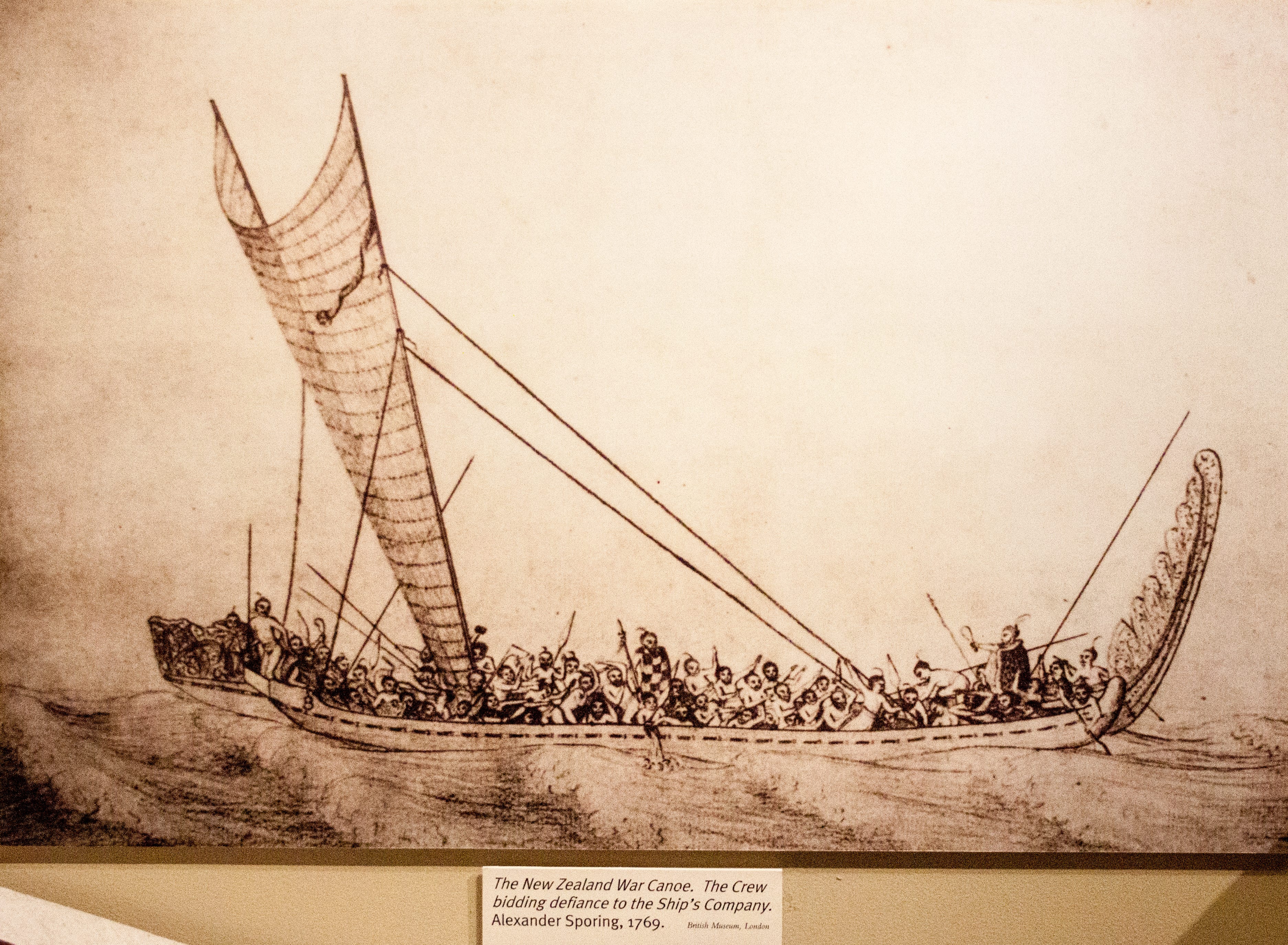
Around seven hundred years ago, a fleet of ocean-going canoes left Eastern Polynesia and pointed south.
The people on board were experienced navigators. They read stars, ocean swells, and the flight paths of birds. They had been moving across the Pacific for generations, and they carried with them everything they thought they would need to start again somewhere they had never been.
And when they made landfall on the two long islands they would come to call Aotearoa, the long white cloud, they walked into a land that was nothing like home.
The islands they had left were tropical. This new land was temperate, forested, and cold. The plant their grandmothers had used to make cloth could not survive here. The crops they had loaded onto the canoes struggled in the soil. The animals were different. Even the sky looked different.
So they did what their ancestors had been doing for generations across the Pacific. They adapted.
These people are the Māori. The land they made is Aotearoa New Zealand. And this is the story of what they designed when they got there, and why everything they built was shaped by the ancestors who had carried them across the sea.
A people held together by names
The Māori never had a single king.
They organised themselves by descent instead. The smallest unit was the whānau, the extended family. Several whānau made up a hapū, the sub-tribe, which was the real political and economic body. Several hapū made up an iwi, the tribe, all of them sharing a single founding ancestor. Today there are still many iwi across Aotearoa, and each one carries its own carvings, its own patterns, its own variations on a shared inheritance.
When this series talks about Māori design, it will name the iwi that holds a tradition wherever the record allows. Treating Māori as one undifferentiated people would be the same mistake as treating Yoruba as one undifferentiated people. When we studied Ile-Ife, we studied a specific city-state and a specific court, not “Yoruba art” in general. Studying Māori means specific peoples, specific genealogies, and specific objects. The people are one. The traditions are many.
And what holds the many together is whakapapa.
The four words that explain everything
Whakapapa is genealogy. But that translation is too small.
Whakapapa is the layered web of descent that ties a person to their parents, to their iwi, to the gods, to the land, to the sea, to the forests, and to the stones in the rivers, all in one continuous line. To know your whakapapa is to know your place in a world where everything is related to everything else. It is the ground that Māori design stands on.
Three other words sit beside it.
Mana is spiritual authority and prestige. It can belong to a person, a place, or an object, and it is not fixed. It grows. A greenstone pendant worn by a grandmother and passed to a grandchild is not the same object as the one she first wore. It has accumulated mana.
Tapu is sacredness, and the restrictions that come with it. The head is the most tapu part of the body. Some places are tapu. Some objects are tapu. Carving was done under tapu, with protocol, by men who held that knowledge.
Mauri is life force. A stone has mauri. A flax plant has mauri. A weaver who pulls fibre from harakeke is working with something alive.
These four words are doing the work in every object you will meet over the next four weeks. The meeting house is whakapapa you can walk into. The moko is whakapapa worn on the face. The cloak is mauri made wearable. The greenstone is mana inheritable.
Hold those four words. You will need them.
What they made when they got here
When the ancestors landed in Aotearoa, they were carrying a Polynesian design inheritance that already included voyaging canoes, carving traditions, body marking, weaving, and a deep cosmology.
So some of what they made in the new land was a deepening of what they brought. And some of it was new.
The clearest case of new is cloth.
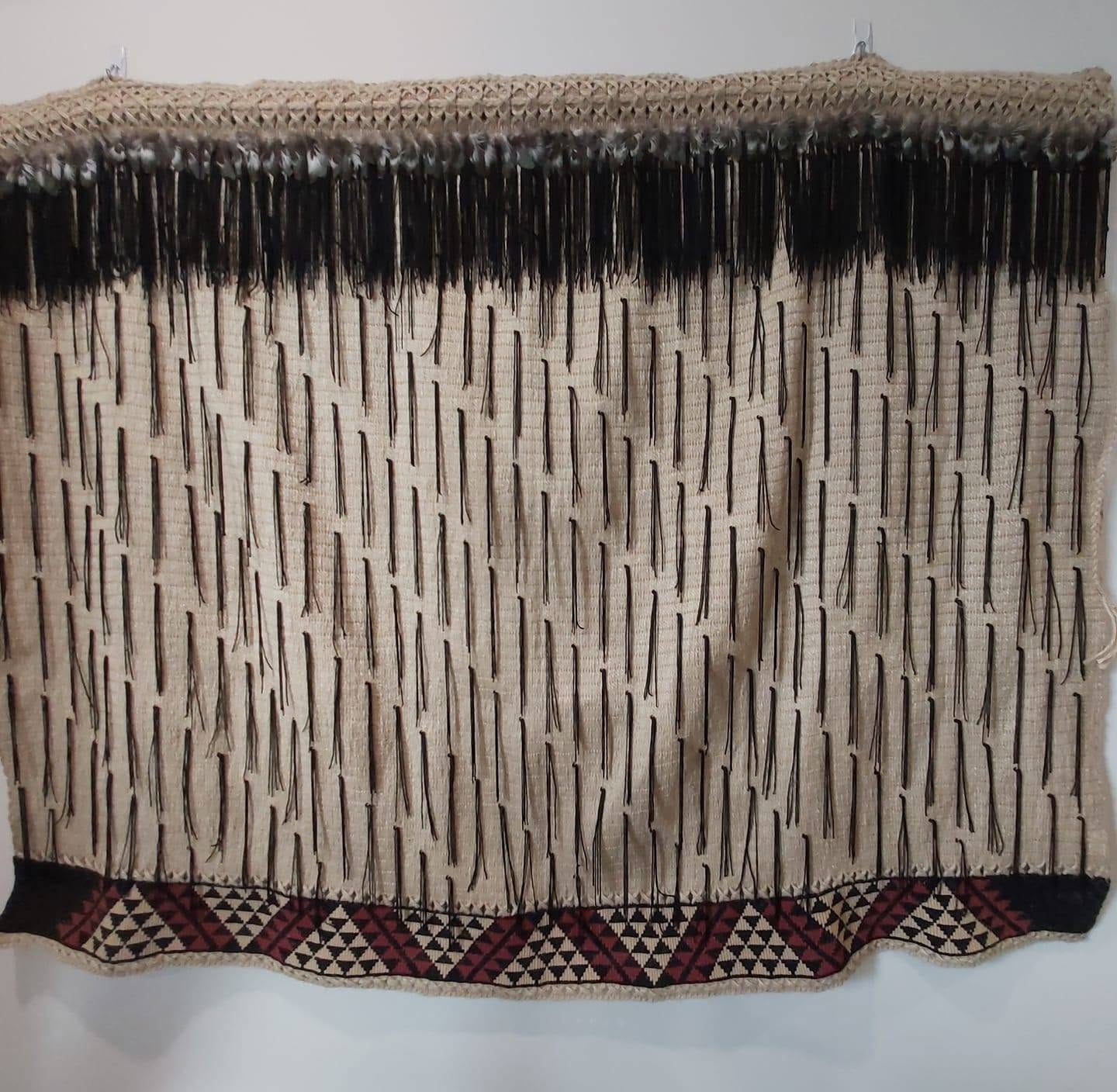
In the tropical Pacific, garments were made from aute, the paper mulberry, beaten into tapa cloth. But aute could not survive in Aotearoa. So the women of the first generations did something extraordinary. They turned to harakeke, the native flax, stripped a fine fibre called muka from inside its leaves, and built an entirely new weaving system around it. They made cloaks. They made baskets. They made mats. They invented the korowai, the feathered cloak that would become the highest expression of woven status in the culture. None of it existed in the Pacific they came from. All of it was forced into being by a colder land.
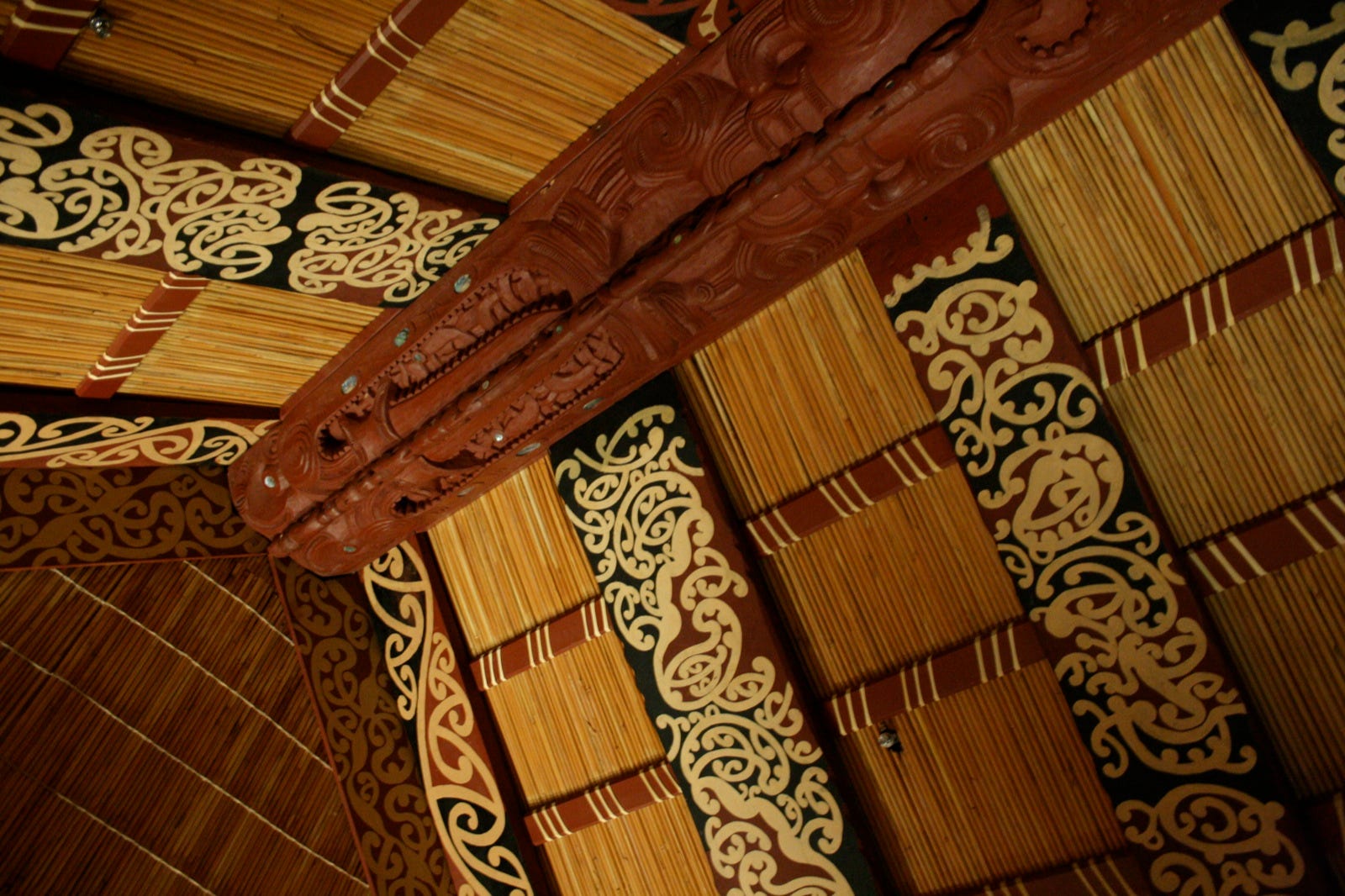
The carving tradition deepened in a different way. Polynesian carving was already old when the ancestors arrived. But in Aotearoa it became something more elaborate, more specific to iwi, and more deeply woven into the meeting house and the canoe. The wharenui, the carved meeting house, became the body of an ancestor that the living could walk inside. No other Polynesian culture built quite like this.
The marking of the body deepened too. Where most of the Pacific punctured the skin with toothed combs, Māori used a chisel that cut grooved furrows into the face. The result was sculptural. It looked carved, because it was.
And the greenstone was always going to be Māori. Pounamu is found in Te Waipounamu, the waters of greenstone, the Māori name for the South Island. The tradition of working it, wearing it, and inheriting it belongs to Māori alone.
Four weeks, four ways of saying the same thing
Over the next four weeks we are going to sit with four traditions. Each one is whakapapa held in a different material.
Week one we walk into a wharenui. The carved meeting house is the body of a founding ancestor. The ridgepole is the backbone. The rafters are the ribs. The boards that reach out from the gable are arms, and the fingers split at their ends. To enter is to enter an embrace. We will look at how a building can be a person, and we will end at Te Whare Rūnanga on the Waitangi Treaty Grounds, which was opened in 1940 to stand for the unity of all iwi.
Week two we sit with tā moko. The chiselled markings on the skin are not tattoos in the way most of the world means the word. Each moko is unique to its wearer, and every part of the face carries different information. We will trace the old story of Mataora, who followed his wife into the underworld and was taught the practice there by her father. We will sit with the suppression of moko under colonisation, and with what its revival looks like now. And we will draw the line between tā moko, which belongs to Māori, and kirituhi, which does not.
Week three we follow the women into the flax. Raranga and whatu, the integrated weaving system, is the place where Māori design intelligence is most visibly an answer to climate. We will meet the harvesting tikanga that protects the centre shoot of the harakeke, and we will spend time inside te whare pora, the figurative house of weaving, where knowledge passes from one generation of weavers to the next.
Week four we travel to the rivers of the South Island to find pounamu. We will follow the taniwha Poutini who guards the stone, the hei tiki that often carries older stone inside it, and the way an object can accumulate meaning across the generations who hold it. By the end of the week we will be sitting with a quiet question the whole series has been asking. What does it mean to design a thing whose meaning is not finished when it leaves the maker’s hand?


What was nearly lost
These traditions did not pass intact from ancestor to descendant. Several of them came close to disappearing.
The Treaty of Waitangi was signed in 1840 between Māori rangatira and the British Crown. What followed included land loss, war, missionary pressure, and decades of sustained attack on cultural practice. Some missionaries condemned carving and chiselled the genitalia off ancestor figures they considered indecent. Tā moko declined to the edge of disappearance through the late nineteenth century. The carved meeting house was held alive partly through the political work of Sir Āpirana Ngata, who understood that a people who lose their architecture lose the houses their ancestors live in.
And the revival that followed in the twentieth century is one of the great cultural recoveries of our time.
The 1984 Te Maori exhibition travelled the United States for two years and helped the world see these works as fine art rather than ethnographic curiosity. That recognition fed back into Aotearoa as confidence in the traditions themselves. Today new meeting houses are still being raised. Moko is being reclaimed across generations, and women are wearing moko kauae again. Weavers work harakeke the way their grandmothers did. Pounamu is recognised in New Zealand law as the taonga of Ngāi Tahu, the principal South Island iwi.
These traditions are alive. They were never ours to lose, and they are not ours to rescue. The work of this platform is to study and translate, never to salvage.
What we don’t know for sure
The exact date of the first arrival in Aotearoa is debated. Most archaeological evidence puts it around 1250 to 1300 CE. Māori oral tradition holds longer occupancy, and the gap between those two records is real. This series will sit with both rather than choose one.
The Hawaiki origin is similarly layered. Some traditions name Hawaiki as a specific place in Eastern Polynesia. Some hold it as a spiritual origin. Both readings live in the culture, and both have weight.
Many of the symbols that get assigned single meanings in tourist contexts actually carry meanings that vary by iwi and by context. The koru does not mean exactly the same thing in every carving. The manaia is not a single creature with one fixed story. Where this series gives the meaning of a motif, it will name the source and the variation rather than flatten it into a one-line definition.
And most of the publicly available material on Māori design online is written for the souvenir market. This series will lean instead on Te Papa Tongarewa, on Te Ara: The Encyclopedia of New Zealand, on the writing of Māori scholars and practitioners, and on iwi sources wherever possible. Where the record is thin, we will say so.
Next week, we walk into the meeting house.