


A korowai is complete when it leaves the weaver's hands. A piece of pounamu begins its real life when someone starts wearing it.
A Stone That Carries Time
A piece of pounamu may spend thousands of years in a river before anyone finds it.
Water shapes it long before human hands ever do. Then someone discovers it, carves it into a tool or pendant, and wears it. Years later it is passed to a child, then to a grandchild, and eventually to someone who never met its first owner.
By then, the stone has become more than a carving. It carries memories, relationships, and family history.
Throughout this series we’ve seen how Māori design expresses whakapapa in different ways. The wharenui turns ancestry into architecture. Tā moko carries identity on the body. Raranga transformed a native plant into an entire material tradition.
Pounamu is where those ideas meet time itself.
The Stone of Te Waipounamu
Pounamu is the Māori name for several related stones, primarily nephrite jade and bowenite, found almost exclusively in Te Waipounamu, New Zealand’s South Island.
Working the stone before metal tools demanded extraordinary patience. Carvers shaped it by grinding it against wet sandstone for days or weeks. Every cut was earned slowly.
Pounamu is also regarded as a taonga with its own mauri, or life force. The way it is found, carved, gifted, and worn follows tikanga that reflects its cultural importance.
Several varieties are recognised, each with distinct qualities.
Kawakawa: deep green, named after the kawakawa leaf.
Kahurangi: pale, translucent, and highly prized.
Īnanga: grey-green, resembling the native fish.
Tangiwai: a translucent form of bowenite whose name means “tears.”
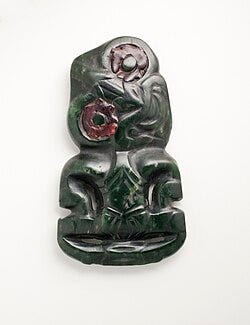
From these stones came some of Māori society’s most important objects: toki (adzes), mere pounamu (short ceremonial weapons), hei tiki, hei matau, and other carved forms that combined practical use with cultural meaning.

The Story of Poutini
Ngāi Tahu tradition tells how pounamu came to rest in the rivers of the West Coast.
Poutini, the guardian taniwha of pounamu, fled south carrying Waitaiki, the wife of the chief Tamaāhua. Pursued across Aotearoa, he reached the Arahura River knowing he could not escape forever.
Before Tamaāhua arrived, Poutini transformed Waitaiki into pounamu and placed her within the river. He then returned to the sea.
According to the tradition, the pounamu found in the Arahura today comes from Waitaiki herself, while the fragments carried downstream are her descendants. Poutini remains the guardian of the West Coast, known as Te Tai Poutini.
The story explains more than the origin of the stone. It connects Ngāi Tahu to the land, establishes guardianship over pounamu, and presents the stone as something with ancestry rather than simply a natural resource.
Carving for Future Generations
Creating a pounamu pendant has always been slow work.
Before metal tools, every cut was made by grinding stone against stone. Holes for cords were drilled gradually using wooden shafts, sand, and water.
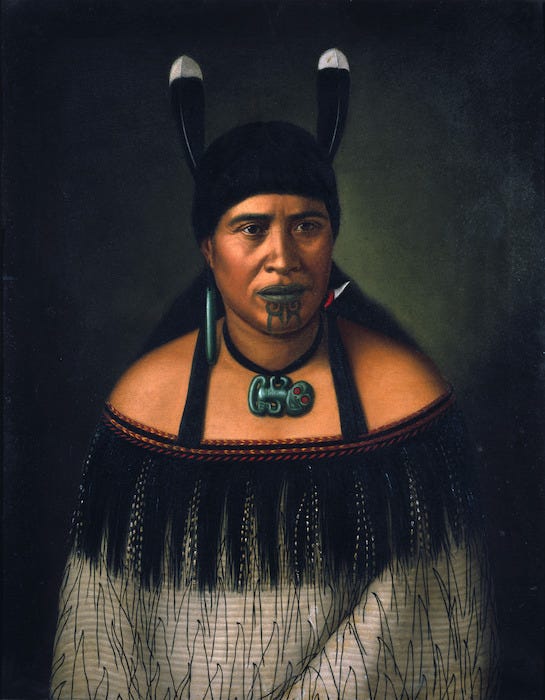
The finished forms became part of a shared visual language. The hei tiki represents a human figure and is among the most recognisable Māori carvings. The hei matau takes the shape of a fish hook, while the pikorua depicts two strands twisting together.
Older objects were often given new life. A damaged toki might be reshaped into a hei tiki rather than discarded. In doing so, the history already held within the stone continued into a new form.
Pounamu was never treated as disposable. Every generation added another chapter to its story.
Meaning Grows With the Stone
A newly carved pendant is only the beginning. Its significance develops through the people who wear it.
When a grandmother gives her hei tiki to a grandchild, the stone carries that relationship forward. It becomes a reminder of the person who once wore it and the generations connected through it.
For this reason, pounamu has traditionally been given rather than bought for oneself. A gift creates a relationship that stays with the stone throughout its life.
Many Māori also understand that a broken or lost piece of pounamu has completed its purpose. Rather than seeing damage as failure, the event is often understood as part of the stone’s own journey.
This perspective differs sharply from modern consumer culture, where new objects are usually considered the most valuable. With pounamu, age adds meaning. The marks left by years of wear are evidence of the lives the stone has accompanied.
Returning Guardianship
For much of the colonial period, pounamu was treated as Crown-owned mineral property.
The Waitangi Tribunal later concluded this was inconsistent with the Treaty of Waitangi. Ngāi Tahu had never understood the sale of land to include ownership of pounamu itself.
Following the Ngāi Tahu settlement, ownership of naturally occurring pounamu within the iwi’s rohe was returned through the Ngāi Tahu (Pounamu Vesting) Act 1997.
Today, Ngāi Tahu are the legal guardians of pounamu found within their traditional territory, bringing New Zealand law into closer alignment with Māori understanding of the stone’s place and significance.
What We Still Don’t Know
Some parts of pounamu history remain uncertain.
The Poutini tradition exists in several versions across different iwi. The broad narrative is widely shared, while details vary according to local tradition.
Archaeologists continue to study the earliest history of pounamu carving, including when forms such as the hei tiki emerged.
The meaning of the hei tiki itself also differs. Some regard it as an ancestor, others connect it to fertility, while other interpretations exist within different iwi traditions.
These differences reflect a living culture rather than a single fixed interpretation.
Why This Matters
Pounamu offers a different way of thinking about design.
Many objects lose value as they age. Pounamu gains it. Its importance comes from the people connected to it, the occasions it has witnessed, and the generations that continue to care for it.
Across this series, each tradition has explored a different expression of whakapapa. The wharenui preserves it in architecture. Tā moko carries it on the body. Raranga gives it material form through fibre. Pounamu carries it through time.
A carved stone can outlive the person who shaped it by centuries. Its meaning keeps growing because every generation leaves something of itself behind.
That may be the greatest lesson pounamu offers: the most enduring designs are not finished when they are made. They continue to gather meaning through the lives they touch.
Further Reading and Resources
Visit
Te Papa Tongarewa, Wellington
Auckland War Memorial Museum
Hokitika and the Arahura region, home to Ngāi Tahu pounamu
Read
Russell Beck & Maika Mason, Mana Pounamu: New Zealand Jade
Te Ara: The Encyclopedia of New Zealand (Pounamu entries)
Paul Madgwick, Poutini: The Ngāi Tahu History of the West Coast
Ngāi Tahu (Pounamu Vesting) Act 1997
Thank you for taking the time to read this essay. I hope it sparked reflection and offered something new to carry into your own practice, it certainly did for me. Save it, share it, and most importantly, support the artists, weavers, architects, and communities who keep these traditions alive.
This is a living document. If you notice a missing link, detail, or thread worth adding, let me know so we can keep building this archive together.
Are you a designer, researcher, or keeper of cultural knowledge? I’d love to hear your perspective in the comments or connect directly via DM.
With love and reverence,
Helen